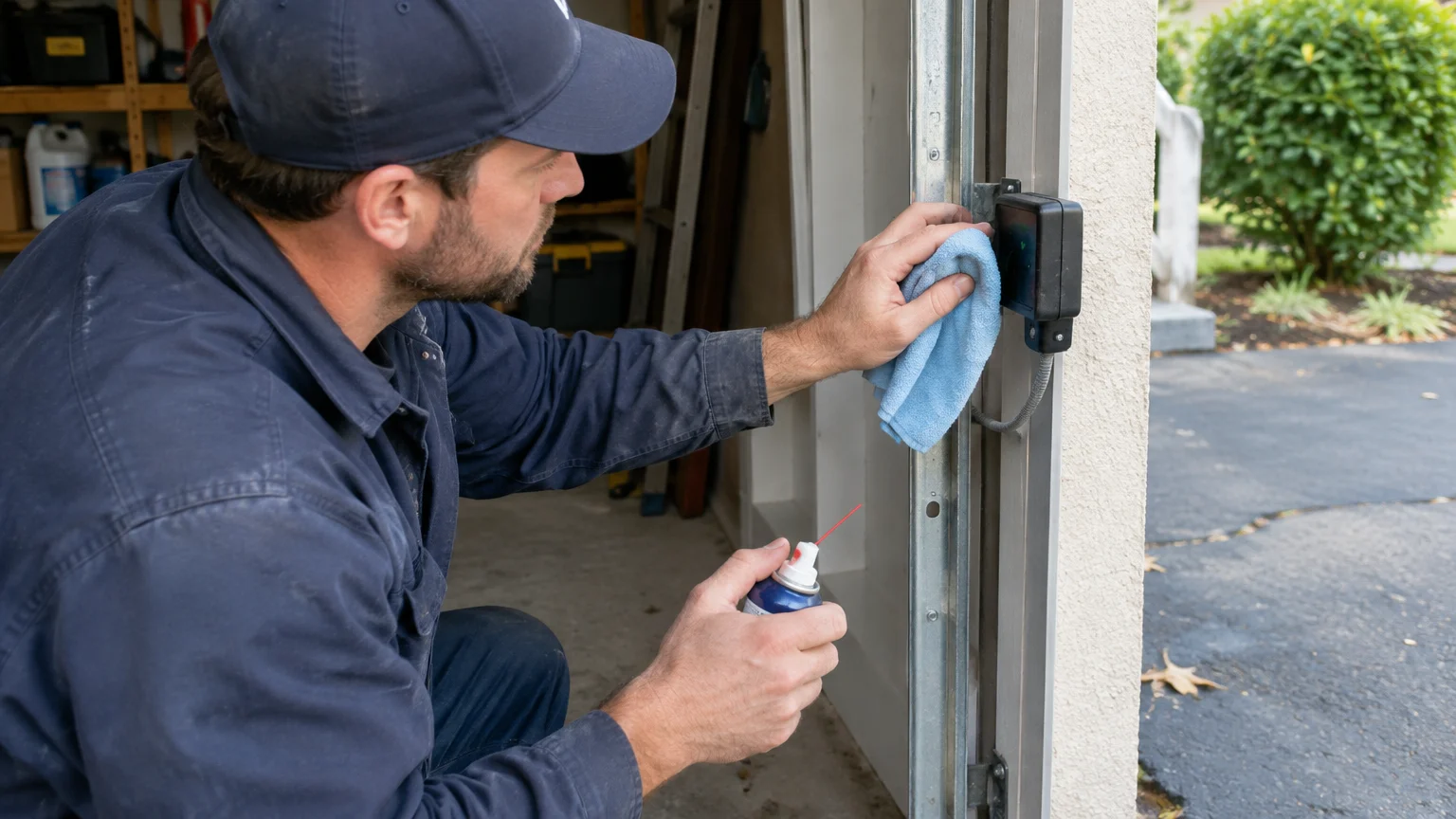
Garage door sensor cleaning can clear dust from the beam path and help a door close again. If a sensor has shifted, a gentle alignment check may also help. Richmond homeowners can safely check for simple problems, but should stop if wires or other door parts look damaged.
How do garage door safety sensors work?
Garage door safety sensors help stop a closing door when something blocks its path. The sensors sit low on each side of the opening and face each other. One sends an invisible beam, and the other receives it. When an object breaks that beam, the opener should stop or reverse the door.
The beam helps protect people, pets, and belongings from a closing door. A toy, bin, leaf, or dirt on a lens may block it. A sensor may also stop working if it loses power, has a damaged wire, or moves out of line. The opener may then refuse to close or reverse soon after it starts moving.
What do the sensor lights mean?
Indicator lights can offer a useful clue, but their meaning depends on the opener’s make and model. A steady light may mean the sensor has power and sees the other sensor. A blinking or dark light may point to a blocked beam, poor alignment, lost power, or a wiring problem. Check the owner’s manual for the meaning of your opener’s lights.
Look at both lights from a safe place while the door is stopped. Do not reach under a moving door or touch exposed wires. If the lights look normal but the door still will not close, the fault may be elsewhere in the opener or door system. Richmond Garage Door Repair can help Richmond property owners work out a safe next step.
A door that will not close can leave a home or business open to weather and unwanted entry. Keep people and pets away from the opening while you check the sensors. Do not treat a working sensor as a nuisance or try to hold the door shut by force.
How do you clean garage door sensors safely?
Garage door sensor cleaning is simple upkeep when the lenses are easy to reach and the door is still. You do not need to take apart the opener or touch springs, cables, or other parts under strong tension. A clean, soft, dry cloth is often enough to wipe dust from a sensor lens.
Before cleaning, make sure the door is fully open or closed and will not move during your check. Keep your hands clear of the tracks and hinges. Do not spray water or cleaner on a sensor, and do not use a rough cloth or tool that could scratch its lens. If a sensor hangs loose or has a damaged wire, stop and ask for professional help.
A homeowner can make these safe checks:
- Look for leaves, cobwebs, bins, or other objects blocking the beam between the sensors.
- Gently wipe each lens with a clean, soft, dry cloth.
- Check that each sensor bracket looks secure and that the sensors face each other.
- Look for loose, cut, or worn wires without pulling or disconnecting them.
- Move objects away from the doorway, then see whether both indicator lights come on.
After cleaning, test the door with its normal wall control while standing clear of it. Watch to see if it closes smoothly and stays closed. If it reverses, stops, or acts in an unusual way, do not keep testing it. A trained technician may need to check the door and opener.
Dust is only one possible cause of trouble. Bright sunlight may sometimes affect a sensor beam, depending on the opener and the sun’s angle. If the problem comes and goes at certain times, note when it happens and tell the repair professional. Do not cover a lens to block sunlight, because that can also block the safety beam.
How can you realign garage door sensors?
A sensor may be out of line if its indicator light changes when the sensor moves gently. The door may also work after someone nudges the bracket. The two sensor faces need to point toward each other across the doorway. Even a small shift can interrupt the beam, though both sensors may look close to level.
First, make sure the door is stopped and the area around the sensors is clear. Look at the brackets from the front. If a sensor is visibly turned, you may gently adjust it only when the bracket moves easily and no wire is pulled tight. Do not bend metal, force a bracket, or loosen parts that are damaged or firmly fixed.
How should the door be tested afterward?
When both sensors face each other and their lights show the expected status, test the door from a safe spot using the wall control. Keep people, pets, and objects out of the opening. Watch the full movement. If the door starts closing and then reverses, stop the test and check the opener manual for its sensor-light guidance.
A successful test does not mean you should bypass or ignore the safety system. The sensors must stay in place and work as designed. If a bracket will not hold its position, a light stays off, or a wire looks worn, do not keep adjusting it yourself. Garage Door Maintenance can help find wear before it causes another problem.
Do not try to repair a spring, lift cable, or bottom bracket during a sensor check. These parts can be under strong tension and may cause serious harm if handled the wrong way. A trained professional has the right tools and skills to check them safely. Richmond Garage Door Repair serves Richmond and nearby communities, including South Richmond, Reeveston, New Paris, Centerville, Boston, and Fountain City. The team can assess a door that stays stuck or seems unsafe.
What should you do if the door still will not close?
If cleaning and a simple alignment check do not help, the cause may be a wiring fault, sunlight, or an opener problem. A door that will not open may also have a wider fault. The sensor lights can give clues, but they cannot confirm every problem with the opener or door system.
Check that nothing blocks the beam and note what the sensor lights do. If the opener makes odd sounds, the door moves unevenly, or a cable looks loose, stop using it. Keep the opening clear and do not force the door down. A heavy door can fall or move without warning when a part has failed.
Never tape, cover, disconnect, or bypass the safety sensors to make the door close. That removes a safety feature meant to help keep the door from closing on a person, pet, or object. If a vehicle is trapped inside, do not try to lift a heavy or uneven door by hand. A repair professional can check the opener, wiring, and door parts and advise you about safe access.
Key takeaways
- Keep the sensor path clear and wipe lenses with a soft, dry cloth.
- Sensor lights may point to a blocked beam, alignment problem, or power fault.
- Make only gentle adjustments when a bracket moves easily and wires are safe.
- Never bypass sensors or work on springs, cables, or bottom brackets.
Frequently Asked Questions
Why will the garage door close only when the wall button is held?
The opener may be signaling that the safety beam is blocked or not working as expected. Check for objects in the path and gently clean the sensor lenses. If the door still closes only while you hold the button, stop using it that way and have the sensors, wires, and opener checked.
Can sunlight stop garage door sensors from working?
It can happen with some sensor and opener setups when bright light falls on a sensor. Note when the problem occurs and check whether anything else blocks the beam. Do not cover or disconnect a sensor. A repair professional can check whether sunlight or another fault is causing the issue.
Should a homeowner replace a damaged sensor wire?
A homeowner should not pull, splice, or disconnect damaged sensor wiring. A visible wire problem can affect safe operation, and it may be hard to know the cause just by looking. Stop using the door if it acts unpredictably and ask a trained repair professional to inspect it.
When should someone call for garage door repair near me?
Arrange local repair help when cleaning and a safe visual check do not restore normal operation, or when wires, brackets, cables, or other parts look damaged. A stuck door can affect home or business safety. Richmond Garage Door Repair can help you understand what needs attention.
Conclusion
A clear beam path and sensors that face each other can solve some door-closing problems. Clean the lenses gently, keep the doorway clear, and test the door from a safe place. Do not bypass the sensors or work on parts under strong tension. If the door remains stuck or unsafe, Contact us to arrange repair help from Richmond Garage Door Repair.
If you are not sure what you are dealing with, it is worth having someone look at it before it turns into a bigger job. Get in touch with Richmond Garage Door Repair today and we will tell you where you stand.