The best garage door opener matches your door’s size, weight, balance, and daily use. Homeowners should compare chain, belt, screw, direct-drive, and wall-mounted models. Safety tools, battery backup, smart controls, and proper fitting also matter. Richmond Garage Door Repair helps property owners choose a safe and reliable opener.
Table of Contents
- What should you consider when choosing the best garage door opener?
- Which garage door opener drive type is best?
- How powerful should a garage door opener be?
- Should you choose a ceiling-mounted or wall-mounted opener?
- What safety features should the best garage door opener have?
- Are smart garage door openers worth choosing?
- How do you choose and prepare for the right garage door opener?
- Frequently Asked Questions
- Key Takeaways
- Conclusion
What should you consider when choosing the best garage door opener?
The right opener must fit the door, garage, and people who use it. A model that works well in one home may not suit another. Door size, weight, balance, noise, security, and access needs all affect the choice.
Match the opener to your door, garage and daily usage
Begin by checking the door type. A single-car door, double garage door, insulated door, or solid wood door may place different demands on an opener. The opener must also match the door height and space above it. Some doors need an extension kit or a special rail.
Daily use matters as well. A home with several drivers may need a strong opener with more than one remote and keypad access. A detached garage may need bright lighting or battery backup. A business may need controlled access, regular care, and a system that works through the day.
The door should move smoothly by hand before a new opener is picked. A rough, heavy, or uneven door can strain any motor. Garage Door Maintenance or Garage Door Off Track Repair may be needed first. An opener should not hide a damaged spring, cable, roller, or track.
Prioritize safety, reliability and convenient access
Safety should come before extra features. The opener needs reversing protection, secure remote signals, and a wall control that is easy to reach. Battery backup can help during a power outage. Bright lights can also make entry safer after dark.
Noise is another key point. A bedroom above the garage may need a quiet belt-drive or wall-mounted model. A detached garage may have fewer noise concerns. Richmond Garage Door Repair helps Richmond homeowners compare these needs without adding features they will not use.
Which garage door opener drive type is best?
No single drive type is right for every garage. Chain-drive models often offer strong lifting power and good value. Belt-drive units tend to run more quietly. Screw-drive, direct-drive, and wall-mounted systems may suit certain door layouts and needs.
Chain-drive openers
A chain-drive opener lifts the door with a metal chain. It is a common choice because the design is proven and works with many home doors. Chain systems may suit heavier doors and garages where some motor noise is acceptable.
The trade-off is sound. The chain and rail may cause vibration, especially when the unit or track is not fitted well. Care may include checking fasteners and following the maker’s lubrication instructions. A worn chain or loud motor can point to a need for Garage Door Opener Repair.
Chain drive does not mean poor quality. A well-fitted model with the right power can provide useful service for years. The best choice depends on the door and garage, not only the drive name.
Belt-drive, screw-drive and direct-drive openers
A belt-drive opener uses a strong belt instead of a metal chain. It is often a good choice when quiet use matters. This can help in homes with living space beside or above the garage. The belt still needs the right tension and a stable rail.
A screw-drive opener uses a threaded steel rod to move the trolley. The trolley is the part that pulls the door along the rail. This design has fewer moving parts than some models, but heat and weather can affect how it works. Follow the maker’s care instructions for cleaning and lubrication.
A direct-drive opener moves the door with a traveling motor. It may run quietly because the motor moves along the rail. A wall-mount garage door opener, also called a jackshaft opener, sits beside the door and turns the torsion bar. This can free ceiling space and reduce clutter.
How powerful should a garage door opener be?
The opener should have enough power for the door without being too large. Horsepower ratings help compare models, but they do not tell the full story. Door balance, spring condition, size, build, and track movement matter just as much.
Choosing the right horsepower for your door
Many home openers use fractional horsepower ratings. A light single door may work with a smaller motor. A wide or heavy door may need more lifting power. The maker’s limits for door size and weight provide the safest starting point.
Do not choose a larger motor only because it sounds stronger. Too much force can add stress when the door is not balanced. The opener must match the full door system. Travel and force settings must also be set correctly.
A professional can check the door before suggesting a model. This helps when the door has thick insulation, windows, heavy trim, or an unusual height. A careful check may also find a fault that a new motor cannot fix.
When door weight, size and balance matter more than horsepower
A balanced door should stay in place when opened by hand through much of its travel. If it drops, rises, binds, or feels very heavy, the springs or other parts may need care. Spring work can be dangerous and should not be treated as a simple opener adjustment.
The opener lifts a working door. It should not carry the full weight of a broken system. If the door is off its track, has a damaged cable, or makes harsh grinding sounds, stop using it. Garage Door Cable Repair or Garage Door Off Track Repair may be better choices than replacing the opener first.
Should you choose a ceiling-mounted or wall-mounted opener?
A ceiling-mounted opener is the usual choice for many homes. A wall-mounted model may be better when ceiling space, storage, or door height makes overhead fitting hard. The garage structure and torsion system must support the selected design.
How ceiling-mounted openers work
A ceiling-mounted opener uses a motor unit, rail, trolley, and arm. The trolley moves along the rail and pulls the door open or pushes it closed. This setup works with many sectional doors and comes in several drive types.
Before fitting one, the installer checks ceiling height, door travel, rail length, outlet location, and mounting points. Low ceilings may need special brackets or a low-headroom setup. Stored items should not block the opener, rail, light, or manual release cord.
Ceiling-mounted units are often easy to service and widely supported. They may also offer strong lights and battery backup. However, they use overhead space and may send some vibration into the ceiling.
When a wall-mounted jackshaft opener makes sense
A wall-mounted opener sits beside the garage door. It turns the torsion tube to move the door, so there is no long rail across the ceiling. This can leave room for storage, lights, a lift system, or a tall vehicle.
The door must have a suitable torsion spring system and enough side clearance. The opener also needs a strong mounting surface. Cable and drum alignment must be correct. This option is not right for every door or garage layout.
A wall-mounted system can be quiet and neat, but its layout is more specialized. Professional Garage Door Installation helps confirm whether the door, walls, and wiring are suitable.
What safety features should the best garage door opener have?
The best garage door opener includes tested safety controls and correct fitting. It should reverse when the closing door meets an object, use sensors near the floor, and allow safe manual release. Homeowners should test these tools often and keep the sensor path clear.
Required reversing and entrapment-protection features
Photoelectric safety sensors sit near the floor on both sides of the door. They create an invisible beam. If the beam is blocked while the door closes, the opener should stop or reverse. Dirty lenses, loose brackets, poor alignment, or damaged wires can prevent this.
Modern openers also use force monitoring. This helps the unit sense resistance during travel. It does not replace the sensors, regular tests, or a sound door system. Never remove, bypass, or cover safety devices.
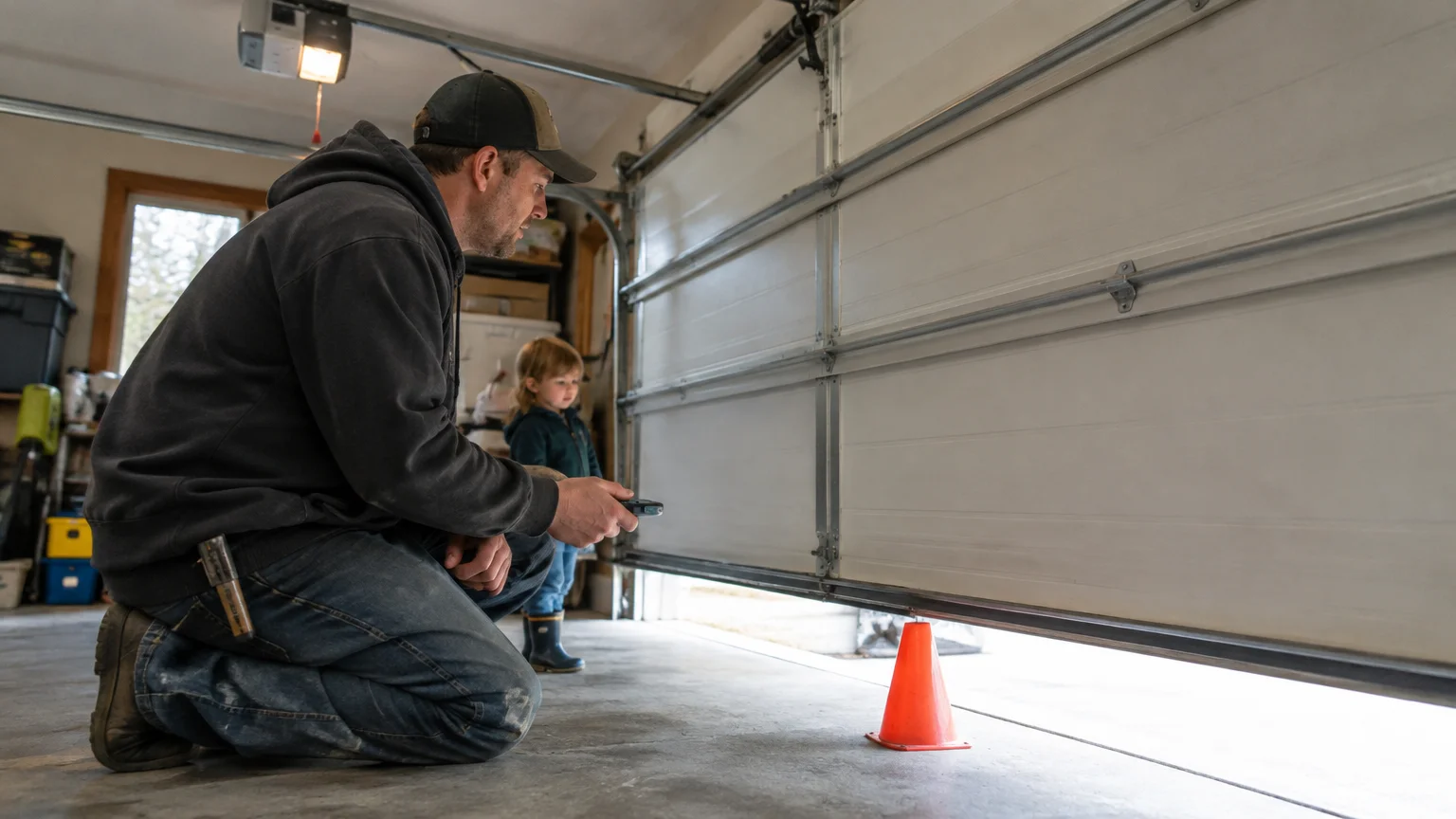
The door should reverse when a suitable test object is placed in its path. Follow the opener maker’s instructions. If it fails, stop using the unit and arrange Garage Door Opener Repair. Children should not play with remotes, wall controls, or the manual release cord.
Battery backup, lighting and secure access controls
Battery backup can open and close the door during some power outages. The backup has limits and needs care. It may not work when the battery is old, the door is damaged, or another fault is present.
Secure rolling-code remotes help reduce the chance of an old signal being used again. A wireless keypad lets trusted users enter without a standard key. Vacation locks, timed closing, and warning lights can add useful control when used correctly.
A garage door is part of the home’s access system. Remove remotes from vehicles when practical. Lost devices should be erased or replaced. These steps support safer access in Richmond homes and businesses.
Are smart garage door openers worth choosing?
Smart features can help when a household needs remote status checks, alerts, or shared access. They are not needed for every garage. A smart opener is worth choosing when the app works with the home network and the owner will use its controls.
Useful app, voice-control and notification features
A smart garage door opener may show whether the door is open or closed. It may send an alert when the door stays open for a set time. Some systems allow temporary access for family, guests, or workers.
Voice control can help when a homeowner has full hands, but it should use safe account controls. The app should also make it easy to remove old users and check access. A smart feature has little value when the connection is weak or the controls are hard to use.
Smart functions should support basic safety, not replace it. An app cannot repair a broken spring, blocked sensor, bent track, or failed motor. For a dead opener, check simple power and remote issues first. Then arrange skilled help if needed.
Connectivity, privacy and compatibility considerations
Before buying, check whether the opener works with the home’s Wi-Fi band, phone, and preferred smart-home system. Some models need an extra hub. Others have built-in connection tools. The maker’s current details should guide the choice.
Privacy matters too. Use a strong account password and available multi-step sign-in protection. Keep the app and opener software updated. Remove access for former residents, workers, and old phones.
A smart opener still needs local controls when the internet fails. Make sure the wall button, remotes, safety sensors, and manual release work correctly. Richmond Garage Door Repair can help property owners, including South Richmond, Reeveston, New Paris, Centerville, Boston, Fountain City, and nearby areas decide whether smart access fits their garage.
How do you choose and prepare for the right garage door opener?
Choosing an opener is easier when the door and garage are checked first. Record the door type, size, balance, headroom, outlet, and access needs. Then the opener can be selected and fitted with fewer problems.
Questions to ask before buying an opener
Ask these questions before ordering a model:
- Is the door balanced, smooth, and free from visible damage?
- What are the door’s width, height, weight, and build?
- Would a quiet belt-drive or wall-mounted design help here?
- Does the garage need battery backup or stronger lighting?
- Will the system support the needed remotes, keypad, app, or smart-home controls?
- Does the ceiling or side wall have safe mounting space?
The opener manual should confirm the model’s limits. Check whether the package includes rails, brackets, sensors, remotes, backup power, and a keypad. Missing parts can delay fitting or change the final setup.
If the old opener stopped working, do not assume replacement is the only answer. A tripped breaker, damaged remote, broken spring, blocked sensor, or loose wire may cause the same problem. Garage Door Opener Repair can find the fault before a new unit is chosen.
What professional fitting and setup typically involves
Professional fitting usually starts with a door and hardware check. The installer confirms that springs, cables, rollers, tracks, hinges, and mounting points are safe. A serious fault should be handled before the new opener carries the door.
The opener is then mounted, connected, and adjusted for travel and force. Safety sensors are aligned, remotes are programmed, and the keypad or app is paired when included. The installer should test opening, closing, reversing, manual release, lighting, and battery backup.
Homeowners should receive basic operating guidance before the job ends. They should know how to use the emergency release, test the sensors, replace remote batteries, and report odd noise or movement. The Contact us page provides a way to reach the local team when opener help is needed.
Frequently Asked Questions
Who services garage doors near me?
Local garage door repair professionals often service openers, springs, cables, tracks, rollers, and doors. Homeowners should seek a company that handles the specific fault and explains the repair clearly. Richmond Garage Door Repair serves Richmond and nearby parts of the area for opener concerns and related door problems.
How do I know which garage door opener fits my door?
Check the door type, size, weight, balance, headroom, and side space. Then compare those details with the maker’s limits. A professional check is wise when the door feels heavy, binds, has broken parts, or uses an unusual spring or track setup.
Is a belt-drive opener better than a chain-drive model?
A belt-drive opener is often better when quiet use matters. A chain-drive model may suit owners who want a proven design for many doors. Neither is always better. Door condition, garage layout, use, care, and proper fitting should guide the choice.
Can a smart garage door opener work without Wi-Fi?
Basic opening and closing often still work with the wall control and remotes when Wi-Fi is down. App alerts and remote access may stop until the connection returns. Confirm the model’s local controls and keep the safety sensors working at all times.
Should a homeowner install a garage door opener alone?
Some handy homeowners can follow a complete maker guide. However, opener fitting involves lifting, wiring, stored spring energy, and safety settings. A professional can check the door first and test the system afterward. Never adjust springs or bypass sensors to finish an installation.
Key Takeaways
- Match the opener to the door, not only to its horsepower label.
- Choose the drive type based on noise, strength, layout, and daily use.
- Check door balance and hardware before replacing a motor.
- Use safety sensors, reversing controls, and secure remotes every time.
- Choose smart features only when the app, network, and access controls fit the home.
Conclusion
The best garage door opener fits the door, garage, budget, and access needs without needless features. Chain, belt, screw, direct-drive, and wall-mounted systems each have useful roles. Safety tests and correct fitting matter more than a long feature list.
A worn or damaged door should be repaired before a new opener is fitted. Richmond Garage Door Repair helps homeowners and property owners review opener choices, find faults, and plan a safe setup.
If you are unsure what is wrong, have the system checked before a small issue becomes a larger job. Contact us today to discuss your opener needs with Richmond Garage Door Repair.