You can often replace garage door panel sections without replacing the whole door. The best choice depends on the damage, door age, panel match, and condition of the tracks and lifting parts. A trained technician can check whether one panel is safe or whether a new door will last longer.
Table of Contents
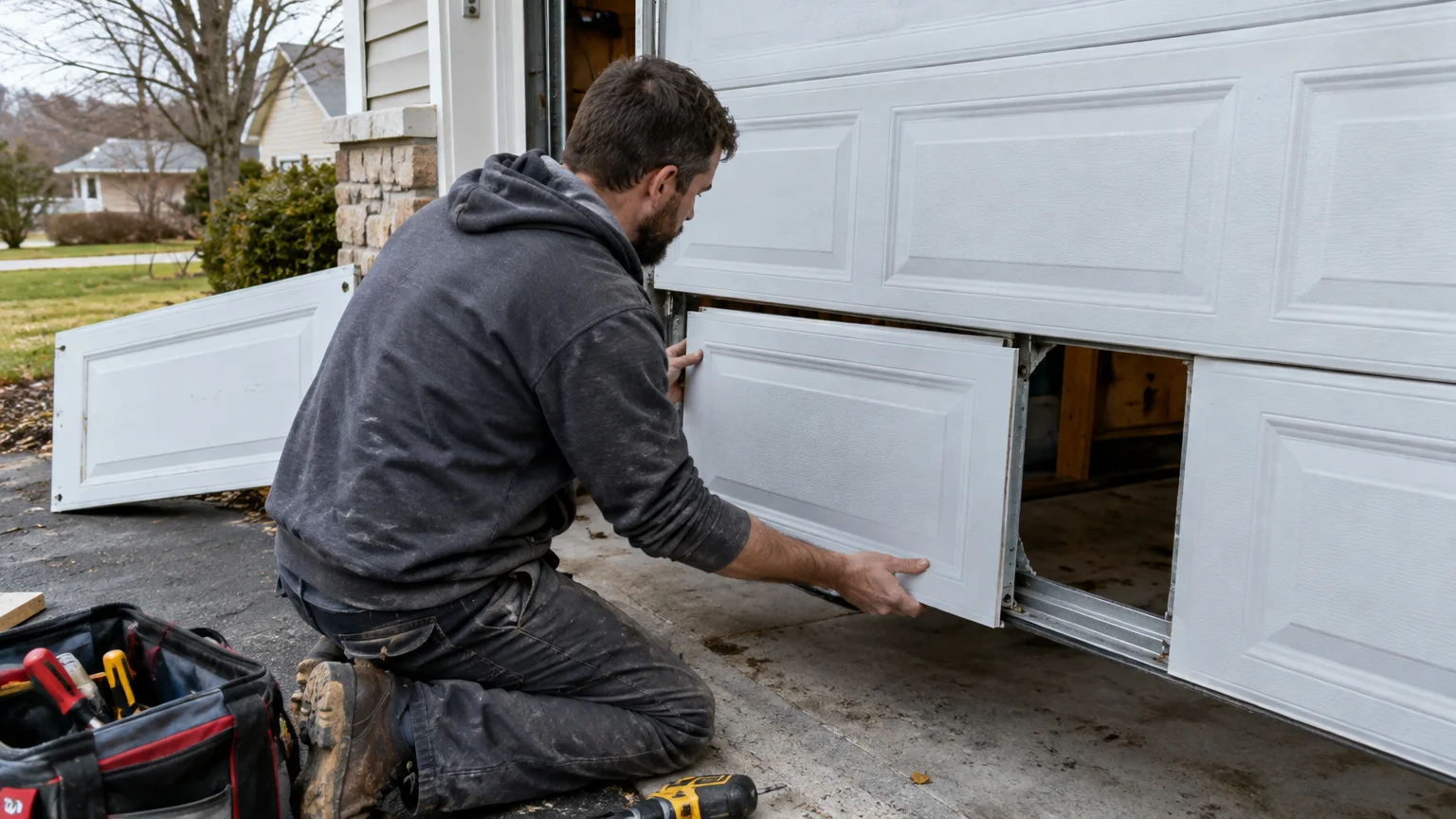
- Can you replace just one garage door panel?
- What types of garage door damage can be repaired?
- How does matching a replacement panel affect the job?
- What factors drive the cost of replacing one garage door panel?
- When is replacing the entire garage door a better choice?
- Can a damaged garage door panel cause other problems?
- How can you decide whether to replace one panel or the whole door?
- Frequently Asked Questions
Can you replace just one garage door panel?
Yes, you can often replace one garage door panel when the other parts remain in good shape. This can work after a car strike, storm, or deep dent. The new section must match the door brand, style, size, and material. A poor match can affect movement, balance, and the look of the door.
When panel-only replacement is usually practical
Panel-only work is often practical when the damage stays in one section. The tracks should be straight, and the hinges, rollers, cables, and springs should work as they should. The door should open and close without twisting, dragging, or pulling to one side.
A technician should check the whole door before giving advice. A damaged panel can hide harm to the frame or lifting system. Richmond Garage Door Repair can help Richmond homeowners choose between one panel, related repairs, and a complete door replacement. The choice should fit the door’s condition, safety needs, and expected life.
When damage affects more than the visible section
A hard impact may bend a track, loosen hinges, or strain the cables. The panel you can see may not be the only damaged part. A door that looks simple to fix may still be unsafe when its weight is not held correctly.
Do not force a damaged door by hand or with the opener. If it is crooked, stuck, or hanging on one side, leave it closed until it is checked. Garage Door Off Track Repair may be needed before you decide whether to replace garage door panel sections.
What types of garage door damage can be repaired?
Small dents, light bends, and some loose hardware may be repairable. Large cracks, deep folds, and broken panel frames often need a new panel. The safe choice depends on whether the section can keep its shape while the door moves.
Dents, cracks, bends, and damaged hardware
A small dent may not affect how the door works. In some cases, a technician can repair the panel instead of replacing it. A sharp bend is more serious because it can change the panel shape and make the rollers rub on the tracks.
Cracks and splits are a bigger concern near a hinge or panel edge. These areas connect the sections and help spread the door’s weight. Damaged hinges, rollers, and brackets may also need repair before the door can move safely.
Homeowners can clear dirt from visible tracks and look for loose hardware. They should not remove springs, cables, or bottom brackets. These parts can hold strong force and may cause serious injury without the right tools and training.
When a panel replacement is safer than a repair
Replacement is often safer when a panel no longer holds its shape. A weak section can flex each time the door moves. That repeated motion may put more strain on the hinges, rollers, and opener.
A new matching section can restore the door’s shape and help it move evenly. Repair may not work well on an old panel, especially when its design is no longer made. Garage Door Spring Repair or Garage Door Cable Repair may also be needed if the impact harmed the lifting system.
How does matching a replacement panel affect the job?
A replacement panel must match more than the opening width. Its height, thickness, shape, hinges, windows, insulation, and finish all matter. The wrong section can leave gaps, add the wrong weight, or keep the door from sealing well.
Door brand, model, size, and panel design
The brand and model can help identify the right replacement. Older doors may have a label or model information inside the garage. If that information is missing, a technician may compare the panel shape and hardware instead.
The new panel must fit the height and width of the other sections. Its connection points must also line up with the hinges and rollers. Even a small mismatch can cause rubbing, noise, or uneven movement. Confirm the part before ordering it.
A local inspection can show whether the door was changed before. Richmond Garage Door Repair serves Richmond and nearby communities, including South Richmond, Reeveston, New Paris, Centerville, Boston, and Fountain City. A full check is better than judging the visible damage alone.
Color, windows, insulation, and finish considerations
A new section may not look exactly like older panels. Sun can fade the existing finish over time. Paint color, surface texture, and window style can also change between production runs.
Insulated doors need a panel with similar construction. A section that is much lighter or heavier can change the door’s balance. Window inserts should match the layout and frame style if you want a consistent look.
When an exact match is not available, compare a close replacement with a complete new door. The right answer depends on the door’s age, look, safety, and future repair needs.
What factors drive the cost of replacing one garage door panel?
The final cost depends on the panel, its fit, labor, access, and hidden damage. One panel is usually a smaller job than replacing a complete door. However, a hard-to-find part or damage near the tracks can make the work more involved. The final cost is confirmed on a quote after inspection.
Materials, compatibility, and availability
The panel material affects the work. Steel, aluminum, wood, and composite sections have different weights and finishes. Insulation and windows add more details that must match the existing door.
Availability also matters. A common modern panel may be easier to find than a section from an old or discontinued door. A custom match may take more planning than a standard replacement. Ask whether the proposed section matches the door’s weight and design.
A panel that looks close but does not balance correctly may cause more repairs later. The safest advice considers both the visible finish and the way the door operates.
Labor, access, removal, and disposal requirements
The job may involve securing the door, removing connected sections, fitting the new panel, and checking the lifting system. A tight garage, poor access, or damage near the tracks can make the work harder.
Removal and disposal may also matter when the damaged section is heavy or unstable. After fitting the panel, the technician may check the rollers, hinges, cables, springs, and opener. Garage Door Opener Repair may be needed if the impact also harmed the automatic opening system.
Urgent help may be needed when the door blocks a vehicle or leaves the garage open. The quote should explain the recommended work and the factors that shape the final cost.
When is replacing the entire garage door a better choice?
A full replacement may make more sense when the door is old, has repeated damage, or needs several major parts. It may also be the better choice when a matching panel cannot be found. The goal is to provide a safe, reliable door for the years ahead.
Age, repeated damage, and outdated components
One damaged panel may be easy to spot, but an older door can have wear in many places. Hinges may be loose, rollers may be noisy, and seals may be brittle. Replacing one section will not fix those wider problems.
Repeated repairs can show that the door is near the end of its useful life. A full replacement can avoid the need to match old parts. It can also bring the hardware into one complete system. Garage Door Installation may be the better path when the current door has broad wear.
A technician should explain why a full replacement is being considered. Ask which parts are damaged, which parts are worn, and whether one panel would still work safely.
Energy efficiency, security, and appearance
A newer door may have better insulation and a tighter garage door seal. This can limit drafts and help nearby rooms feel more comfortable. A sound door can also support home security by closing firmly.
Appearance matters too. One new panel may stand out next to faded sections. A complete replacement creates one finish, window layout, and surface style. This may matter if you plan to sell or improve the front view of the property.
The best choice still depends on the home, budget, safety needs, and condition of the current door. A complete replacement is not always needed. It should be considered when several problems appear together.
Can a damaged garage door panel cause other problems?
Yes, a damaged panel can change how the whole door moves. A bent section may pull on hinges, strain rollers, or make the door sit unevenly. Continued use can turn a small repair into a larger safety issue.
Effects on tracks, rollers, hinges, and springs
Garage door sections move together as one system. If one panel bends, rollers may rub or leave the track. Hinges can twist, and the door may place uneven force on cables and springs.
The opener may also struggle when the door becomes heavier or harder to lift. A motor that works against extra resistance can wear faster. Loud sounds or slow movement after an impact should not be ignored.
Cleaning visible dirt from tracks is usually safe. Testing balance, removing spring parts, or adjusting cables is not a safe homeowner task. Torsion springs, extension springs, lift cables, and bottom brackets can release stored force without warning.
Warning signs that the door should remain closed
Keep a damaged door closed when it is crooked, partly off the tracks, or unable to rest evenly. Other warning signs include a loose cable, hanging panel, broken glass, or a loud snap during movement.
Do not use the opener to force the door through resistance. Keep people and vehicles away from the area and arrange professional help. Emergency Garage Door Repair may be needed when the door cannot secure the garage or blocks safe access in Richmond.
How can you decide whether to replace one panel or the whole door?
The decision should come from a full safety check, not the panel’s look alone. The technician should check the door structure, lifting parts, opener, tracks, seals, and replacement options. The advice should explain both the immediate repair and likely future concerns.
Questions to ask during an inspection
Ask whether the panel is still made and whether a replacement will match the other sections. Also ask if the impact harmed the tracks, hinges, rollers, cables, springs, or opener.
Useful questions include:
- Is the door safe to operate right now?
- Can one panel match the current size, weight, windows, and finish?
- Are other parts worn or bent beyond normal use?
- Would the repaired door still seal and balance correctly?
- Would a full replacement solve several problems at once?
These questions help you understand the advice without relying on a quick visual guess.
What to expect from a repair or replacement recommendation
A clear recommendation should name the damaged parts and explain why repair, panel replacement, or a new door is suitable. It should also explain any safety limits, such as keeping the door closed until work is complete.
Richmond Garage Door Repair can assess garage door problems for property owners and nearby areas. The right choice may be one panel, related hardware, or a complete door. The best garage door decision comes after the full system has been checked.
Key Takeaways
- One garage door panel can often be replaced when the rest of the door is sound.
- The replacement must match the door’s brand, size, design, weight, and features.
- Hidden damage to tracks, hinges, cables, springs, or the opener can change the advice.
- A full replacement may suit an older door with repeated damage or outdated parts.
- Spring and cable work should be left to trained professionals with proper tools.
Frequently Asked Questions
Can a homeowner replace a garage door panel?
A homeowner can inspect the door, clear loose dirt from visible tracks, and report changes in operation. Panel replacement is usually best left to a trained technician because the work can involve heavy sections and parts under force. Springs, cables, and bottom brackets should never be handled as a do-it-yourself repair.
How do you repair a damaged garage door panel?
The repair starts with an inspection of the panel and the full door system. A small dent may be repairable, while a bent or cracked section may need replacement. The technician must also check the hinges, rollers, tracks, cables, springs, and opener before returning the door to service.
How do you change garage door panels?
Changing a panel means supporting the door, separating connected sections, fitting the replacement, and checking the lifting system. These tasks can expose a person to heavy moving parts and stored spring force. A homeowner should not follow a step-by-step method without proper training and equipment.
Is it better to replace one panel or the whole garage door?
One panel may be better when the door is fairly sound and an exact match is available. A full door may be better when the door is old, has repeated damage, or needs several major parts. The decision should follow a complete inspection and a quote that explains the recommended work.
What should happen if a panel is off track?
Leave the door closed and keep people away from the damaged area. Using the opener can worsen the damage or pull on the cables and springs. Garage Door Off Track Repair may be needed before a panel can be replaced. A technician can check whether the tracks and lifting parts remain safe.
If you are unsure what happened, have the door checked before the problem grows. Contact us today to arrange an urgent inspection with Richmond Garage Door Repair.